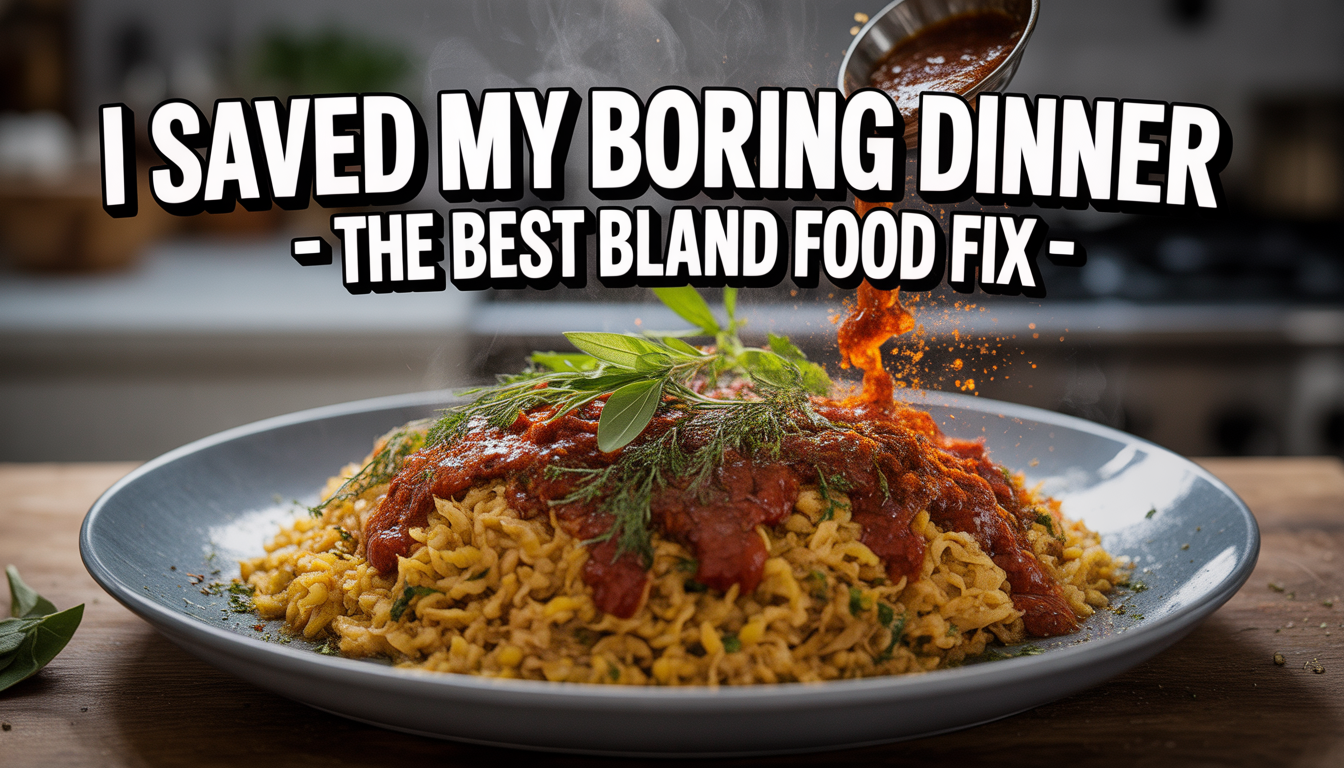
I remember a Tuesday night about three years ago when I sat down to a plate of what was supposed to be a creamy chicken pasta. I had followed the recipe exactly, I had spent forty-five minutes at the stove, and I had used every dish in the kitchen. I took the first bite, chewed slowly, and felt a wave of pure sadness wash over me. It tasted like nothing. It wasn’t bad, it wasn’t burnt, and it wasn’t spoiled. It was just beige. It was a culinary void. I looked at my partner, who was politely moving a piece of broccoli around his plate, and I realized that life is far too short to eat boring food. That was the night I stopped being a “recipe follower” and started becoming a “flavor fixer.” I spent the next several years obsessed with the science of taste, and I am going to share every single secret I discovered about how to take a bland dinner and turn it into a five-star masterpiece in under sixty seconds.
The Tragedy of the Beige Meal:
We have all been there. You find a beautiful photo on a website, you buy the expensive ingredients, and you put in the work, but the result is a total letdown. Most people think that if a dish is bland, they just need to add more salt. While salt is a huge part of the equation, it is only the beginning of the story. A truly “pro-level” dish is a complex balance of five different pillars of flavor. When one of those pillars is missing, the whole thing collapses into blandness.
I used to think that “bland” meant I had failed as a cook. I felt embarrassed to serve food that didn’t have a “wow” factor. But I eventually learned that even the best chefs in the world have to “fix” their dishes right before they leave the kitchen. They taste, they tweak, and they adjust. The difference between a home cook and a professional is simply the knowledge of which “lever” to pull when a dish feels flat. I have identified the five major levers that can save any dinner, and once you understand them, you will never have a boring meal again.
The First Pillar: Salt Beyond the Shaker:
Salt is the most important ingredient in your kitchen, period. It is not just a flavor itself; it is a flavor enhancer. At a molecular level, salt reduces the surface tension of water, which allows the aromas of the food to escape and reach your nose more easily. Since most of what we “taste” is actually what we smell, salt is essentially a volume knob for flavor.
I used to use standard table salt for everything. I didn’t realize that the shape of the salt crystal actually changes how it interacts with food. Now, I only use kosher salt or sea salt for my cooking. Table salt is too fine and too salty, it is very easy to overdo it. Kosher salt has large, flat crystals that are easy to pinch with your fingers, giving you total control over the seasoning process.
- Season as you go: Don’t just salt at the end. Add a little bit of salt every time you add a new ingredient to the pan. This builds layers of flavor that you simply cannot get by throwing a bunch of salt on the plate at the table.
- The pasta water rule: Your pasta water should taste like the ocean. If you don’t salt the water, the pasta itself will be bland, and no amount of sauce can fix that from the outside.
- Salt the meat early: If you are cooking a steak or a chicken breast, salt it at least twenty minutes before it hits the pan. This gives the salt time to penetrate the fibers and season the meat from the inside out.
I remember the first time I properly seasoned a roast chicken. I used way more salt than I thought was “safe,” rubbing it under the skin and deep into the meat. When it came out of the oven, it was the most flavorful thing I had ever eaten. It taught me that most home cooks are simply afraid of salt, and that fear is the number one cause of boring dinners.
The Second Pillar: The Brightness of Acid:
If you have added salt and the food still tastes “heavy” or “dull,” you don’t need more salt. You need acid. This was the single biggest “aha” moment of my culinary life. Acid acts as a counterweight to fat and salt. It brightens up the flavors and makes your mouth water, which actually makes you want to keep eating.
I used to think vinegar was just for salad dressing. I didn’t realize that a tiny splash of acid can transform a soup, a stew, or a piece of fish. If I am eating a bowl of chili and it feels like a “muddy” wall of flavor, I add a squeeze of fresh lime juice. Suddenly, the spices pop, the meat tastes richer, and the whole dish feels lighter.
- The Lemon Trick: Keep a bowl of lemons on your counter at all times. A squeeze of lemon juice at the very end of cooking is the “secret weapon” of almost every restaurant chef.
- Vinegar Varieties: Keep a collection of vinegars. Red wine vinegar is great for hearty meats, apple cider vinegar is perfect for pork and beans, and rice vinegar is amazing for stir-frys and Asian-inspired dishes.
- Pickles and Ferments: Don’t forget that pickles, capers, and kimchi are all “acid bombs.” If a sandwich feels boring, add a pile of pickled onions. The acidity will cut through the bread and meat and wake up your palate.
I once made a very thick, creamy mushroom soup that tasted like wet cardboard. I was about to throw it away when I remembered my acid rule. I stirred in one tablespoon of dry sherry vinegar. It was like someone turned on the lights in a dark room. The earthiness of the mushrooms exploded, and the creaminess felt elegant instead of heavy.
The Third Pillar: Fat as a Flavor Carrier:
There is a reason why “fat tastes good.” Fat is a carrier for flavor compounds that are not water-soluble. Many of the most delicious aromas in spices and herbs can only be released when they are dissolved in fat. If you are eating a “low-fat” meal and it feels bland, it is because the flavor has nothing to cling to.
I used to be afraid of using too much oil or butter because I wanted to be healthy. But I realized that you don’t need a gallon of it. You just need enough to “coat” the flavors. Using a high-quality extra virgin olive oil or a pat of grass-fed butter at the end of cooking can change the entire “mouthfeel” of a dish.
- Finish with Oil: Instead of just cooking with oil, try drizzling a very high-quality olive oil over your finished soup or pasta. It adds a silky texture and a peppery finish that is incredibly luxurious.
- Toasted Nuts and Seeds: Adding toasted walnuts, pine nuts, or sesame seeds adds healthy fats and a deep, nutty flavor that provides a great contrast to soft foods.
- The Power of Cream: A single tablespoon of heavy cream or a dollop of full-fat Greek yogurt stirred into a sauce can smooth out the sharp edges of spices and make the meal feel more satisfying.
I remember making a simple tomato sauce that felt very acidic and sharp. I added a small knob of cold butter right at the end and whisked it in. The sauce turned a beautiful glossy orange, and the sharp bite of the tomatoes transformed into a mellow, rich flavor that clung to every strand of spaghetti. It was a “pro” move that cost about five cents to execute.
The Fourth Pillar: The Warmth of Heat:
When I say “heat,” I don’t just mean “spicy.” While chili peppers are great, there are many different ways to add “warmth” to a dish to keep it from being boring. Heat stimulates the nerves in your mouth and releases endorphins, which makes the eating experience more exciting.
I used to think that “heat” meant I had to burn my tongue. But I learned that there are “top notes” of heat and “bottom notes” of heat. A top note is something like a fresh jalapeño that hits you right away. A bottom note is something like black pepper or ginger that builds a slow, comforting warmth in the back of your throat.
- Fresh Black Pepper: Stop using the pre-ground pepper that comes in a tin. It tastes like dust. Buy a pepper mill and grind it fresh over every meal. The essential oils in the peppercorns are highly volatile and disappear quickly, so fresh-cracked pepper is a completely different ingredient from the dusty stuff.
- Aromatics: Onions, garlic, and ginger are the “aromatic” base of almost every great meal. If a dish is bland, you probably didn’t use enough of these at the beginning.
- Mustard and Horseradish: These provide a “nasal” heat that is very different from chili peppers. A teaspoon of Dijon mustard in a pan sauce can add a sophisticated “kick” that fixes a boring piece of chicken in seconds.
I once made a pot of mashed potatoes that were perfectly salted but still felt uninspiring. I folded in a tablespoon of prepared horseradish and some fresh chives. Suddenly, the potatoes were the star of the show. They had a “zing” that made them impossible to stop eating. This is the power of using heat as a subtle tool rather than a blunt instrument.
The Fifth Pillar: The Umami Bomb:
Umami is the “fifth taste,” often described as savory or meaty. It comes from glutamate, an amino acid that tells your brain “this is high-protein, high-energy food.” If a dish feels like it is “missing something” but you can’t put your finger on it, you are probably missing umami.
I used to think umami was only found in steak. Then I learned that it is everywhere. Mushrooms, tomatoes, aged cheeses, and even soy sauce are packed with umami. I started keeping a “rescue cabinet” of umami-rich ingredients that I can stir into almost any boring meal to give it instant depth.
- The MSG Myth: Don’t be afraid of MSG. It is a naturally occurring salt found in seaweed and tomatoes. A tiny pinch of MSG can make a vegetable soup taste like it has been simmering with a ham bone for twelve hours.
- Parmesan Rinds: Never throw away the hard end of a piece of Parmesan cheese. Keep them in your freezer and toss one into your next soup or stew. It will melt slowly and release a massive amount of savory depth.
- Soy Sauce and Fish Sauce: You don’t have to be making Asian food to use these. A teaspoon of fish sauce in a Bolognese sauce or a splash of soy sauce in a beef stew adds a “dark” savoriness that salt alone cannot provide. You won’t taste “fish,” you will just taste “richness.”
I remember a vegetarian chili I made that felt very thin and “watery” in flavor. I added a tablespoon of tomato paste and a splash of soy sauce. The change was miraculous. The chili suddenly had a “meaty” backbone that made it feel hearty and filling. It is the ultimate bland food fix for plant-based meals.
The Importance of Texture Contrast:
A dish can have perfect flavor but still feel boring if the texture is all the same. If everything on your plate is soft, your brain gets bored very quickly. This is why we love “crunchy” things so much. Texture is a huge part of the user experience of a meal.
I used to serve “soft” meals like risotto or mashed potatoes without any topping. Now, I am obsessed with “the crunch.” Every meal needs a bit of contrast to keep the palate interested.
- The Maillard Reaction: This is the scientific name for the “browning” of food. When you sear a piece of meat or roast a vegetable until it is dark and crispy, you are creating hundreds of new flavor compounds that aren’t present in steamed or boiled food.
- Garnish for Texture: Always keep something crunchy in your pantry. Croutons, toasted breadcrumbs (Panko), fried onions, or even raw radishes can provide that necessary “snap” that makes a meal feel complete.
- Fresh Herbs: Soft, fresh herbs like cilantro, parsley, and basil add a different kind of texture and a burst of “green” flavor that cuts through rich foods.
I once made a very simple bowl of white beans. On their own, they were a bit mushy and plain. I fried some sage leaves in a little bit of butter until they were “glassy” and crisp, and I sprinkled them over the top with some toasted breadcrumbs. The beans were still soft, but the “shatter” of the sage leaves made every bite an adventure.
The “Rescue Cabinet” Checklist:
If you want to be ready to save any boring dinner, you need to keep a few specific items in your kitchen at all times. I call this my “Flavor Insurance Policy.” If I get home late and have to throw together a quick meal, these are the items that ensure it will actually taste good.
- Lemons and Limes: For that essential acid hit.
- Aged Cheese: Parmesan or Pecorino for an umami boost.
- High-Quality Olive Oil: To add “fat” and silkiness at the end.
- Red Pepper Flakes: For a quick hit of heat.
- Anchovy Paste: Don’t be scared! It melts into sauces and adds a massive savory depth without tasting like fish.
- Fresh Garlic and Ginger: The foundation of all good smells.
- Honey or Maple Syrup: Sometimes a tiny bit of sweetness is the “acid” to a very bitter or salty dish.
I remember a night when I only had a box of dry pasta and some old frozen peas. It looked like the most boring dinner in history. I boiled the pasta, tossed it with the peas, a lot of garlic, a splash of lemon juice, a big handful of Parmesan, and some red pepper flakes. It was better than most of the meals I eat at restaurants. It wasn’t about the ingredients; it was about the flavor balance.
The Psychology of the Boring Meal:
Sometimes, food is bland because we are eating it in a “bland” way. If you eat standing up in your kitchen or while staring at a screen, your brain isn’t fully processing the flavors. I learned that the presentation and the environment actually change how we perceive taste.
- Use a Nice Plate: It sounds silly, but food actually tastes better when it looks beautiful. Use a clean plate, wipe away any drips, and arrange the food with a little bit of care.
- Turn Off the Tech: Give your meal your full attention. When you focus on the smells and the textures, you will find that the food feels much more satisfying.
- The Power of Color: A beige meal looks boring. Adding a pop of color with a green herb or a red pepper makes your brain expect more flavor, which actually “primes” your taste buds to be more sensitive.
I spent years eating “sad desk lunches” that I barely tasted. When I started taking fifteen minutes to put my food on a real plate and sit by a window, I found that even a simple turkey sandwich tasted like a gourmet meal. It is part of a sustainable living philosophy, taking the time to appreciate what we have rather than just “consuming” it.
How to Fix a Specific “Bland” Disaster:
Let us look at some common “boring” meals and how I would fix them using these pillars. This is the practical application of the science of flavor.
- Bland Chicken Breast: It usually needs salt and acid. Slice it thin, squeeze lemon over it, and add a dollop of pesto (fat and umami) or a sprinkle of smoked paprika (heat and color).
- Watery Vegetable Soup: It needs umami and texture. Add a spoonful of miso paste or a Parmesan rind, and top it with crunchy croutons or a drizzle of heavy cream.
- Dull Pasta Sauce: It usually needs acid and fat. Add a splash of balsamic vinegar and a big knob of butter. If it is still boring, add some freshly grated cheese.
- Boring Salad: It needs “interest.” Add something pickled (acid), something nutty (fat/crunch), and something spicy, like a few slices of radish or a pinch of black pepper.
I once helped a friend who had made a giant pot of “healthy” lentil stew that tasted like dirt. We added a big splash of apple cider vinegar, a spoonful of honey to balance the earthiness, and a generous amount of toasted cumin seeds for “warmth.” She couldn’t believe it was the same soup. It went from “inedible” to “incredible” in about two minutes.
Why We Should Stop Following Recipes Exactly:
A recipe is a map, but it isn’t the road. Every lemon has a different amount of juice, every brand of salt has a different “saltiness,” and every stove cooks at a different temperature. If you just follow the numbers on the page, you aren’t actually “cooking,” you are just assembling.
I learned to taste my food at every single stage. I taste the sauce before the pasta goes in. I taste the meat after it rests. I ask myself, “Does this need more salt? Is it too heavy? Does it need a ‘zing’ of acid?” This constant feedback loop is the only way to ensure your food is never bland. It turns cooking from a chore into a creative process.
I want you to feel empowered in your kitchen. I want you to look at a boring bowl of rice and see it as a “blank canvas” rather than a failure. Once you have your “rescue cabinet” and you know the five pillars of flavor, you are the boss of your dinner. You have the power to save any meal, and that is a very satisfying feeling.
Bottom Line:
Fixing bland food is a skill that will serve you for the rest of your life. By mastering the balance of salt, acid, fat, heat, and umami, you can transform even the simplest ingredients into a meal that you are proud to serve.
FAQs:
1. What is the fastest way to fix a bland soup?
Add a squeeze of lemon or a teaspoon of vinegar. Most of the time, “bland” soup is actually just “flat” and needs acid to brighten it up.
2. Is it possible to over-salt a dish?
Yes, but you can often fix it by adding more volume (like more water or vegetables) or by adding a bit of sweetness and acid to distract the palate.
3. What is the best umami source for vegetarians?
Miso paste, soy sauce, sun-dried tomatoes, and nutritional yeast are all incredible sources of savory depth.
4. Why does my food taste better the next day?
Flavors have more time to “marry,” and the aromatics have more time to release their oils into the fats of the dish.
5. Can I use dried herbs instead of fresh?
Yes, but remember that dried herbs are more concentrated. Use one teaspoon of dried for every tablespoon of fresh, and add them earlier in the cooking process.
6. What should I do if my food is too spicy?
Add fat! Dairy products like sour cream or milk contain a protein called casein that breaks down the heat of chili peppers.